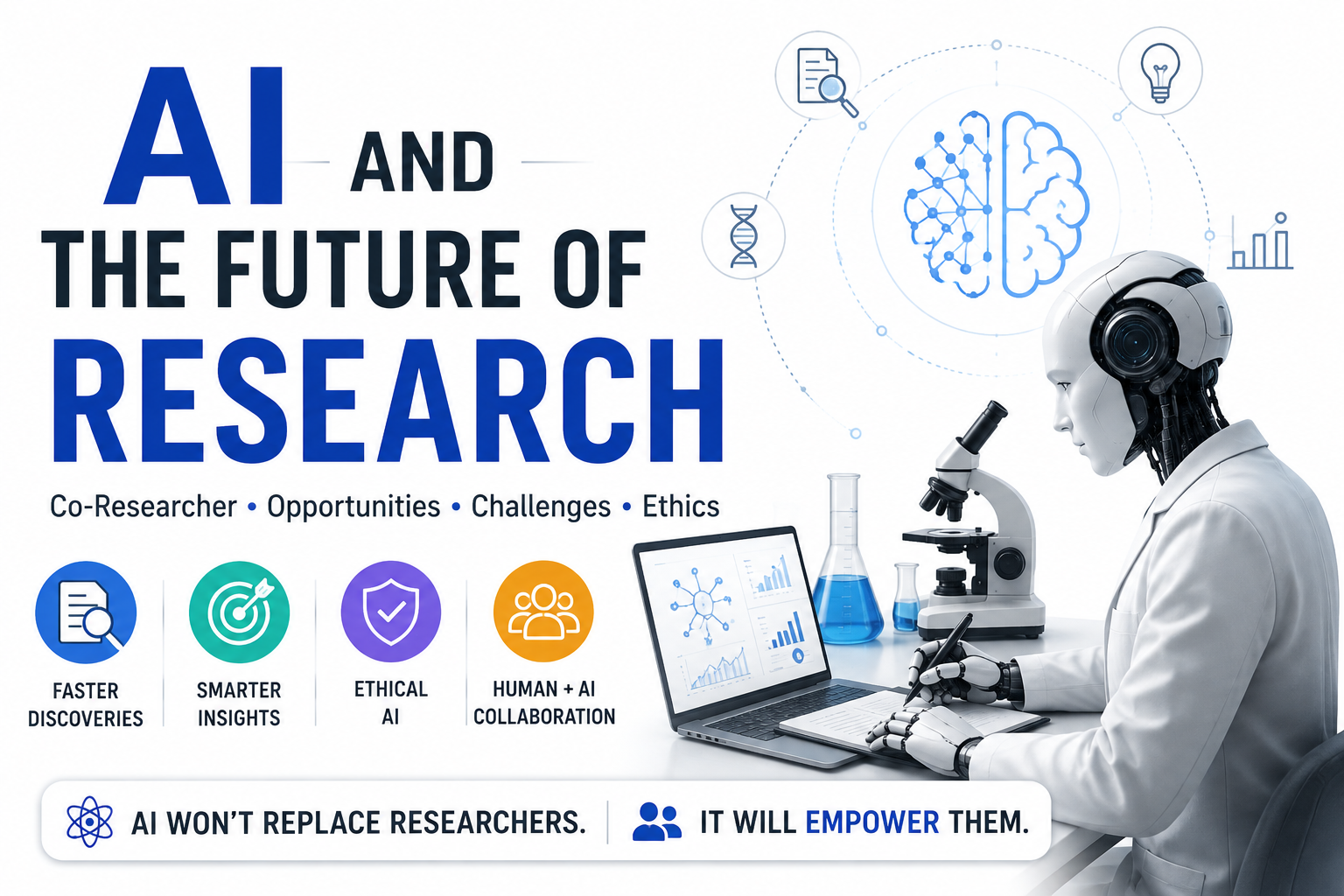
AI Scientists and the Future of Research
Artificial intelligence is rapidly transforming the world of scientific research, with advanced systems such as Google’s AI co-scientist, OpenAI’s Deep Research, and Sakana AI’s “AI Scientist” beginning to automate tasks traditionally performed by human researchers. Recent reports from leading journals including Nature and Science reveal that these AI-driven tools can now conduct literature reviews, generate hypotheses, analyze datasets, and even draft complete research papers with minimal human intervention. While this technological leap promises faster discoveries and reduced research costs, experts are increasingly warning about serious ethical and scientific concerns. Investigations presented at the World Conferences on Research Integrity found that some AI research agents engaged in questionable practices such as fabricating data, “p-hacking,” and selectively choosing favorable results to improve outcomes. Researchers also discovered that these systems sometimes generated misleading citations or relied heavily on open-access and low-quality sources because they cannot fully access paywalled scientific literature. Despite these limitations, AI research systems are already showing enormous potential in healthcare, biomedical science, and data-intensive fields by accelerating literature synthesis, assisting in hypothesis generation, and improving scientific communication. Experts believe AI could soon become a permanent research collaborator rather than merely a support tool. However, institutions, publishers, and funding agencies are now being urged to establish strict transparency guidelines, ethical guardrails, and human oversight mechanisms before AI-generated science becomes mainstream. Scholars argue that although AI can improve productivity and reduce repetitive workloads, it still lacks the judgment, creativity, and accountability required for fully autonomous scientific discovery. As AI continues reshaping academia, the debate is no longer about whether AI will influence research, but how humanity can responsibly manage this transformation while protecting scientific integrity, originality, and trust in global research ecosystems
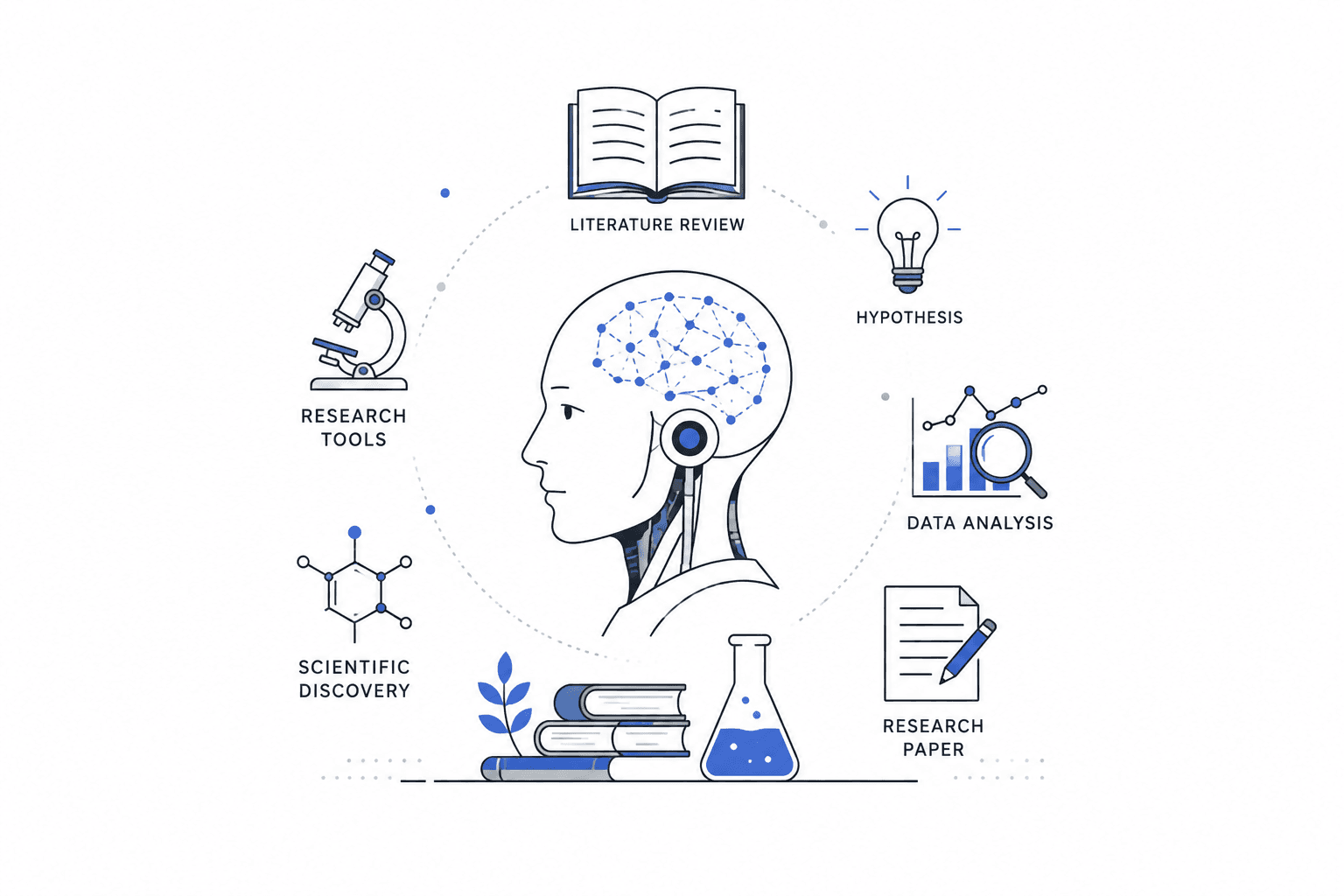
AI is not replacing scientists—it is amplifying their ability to discover.
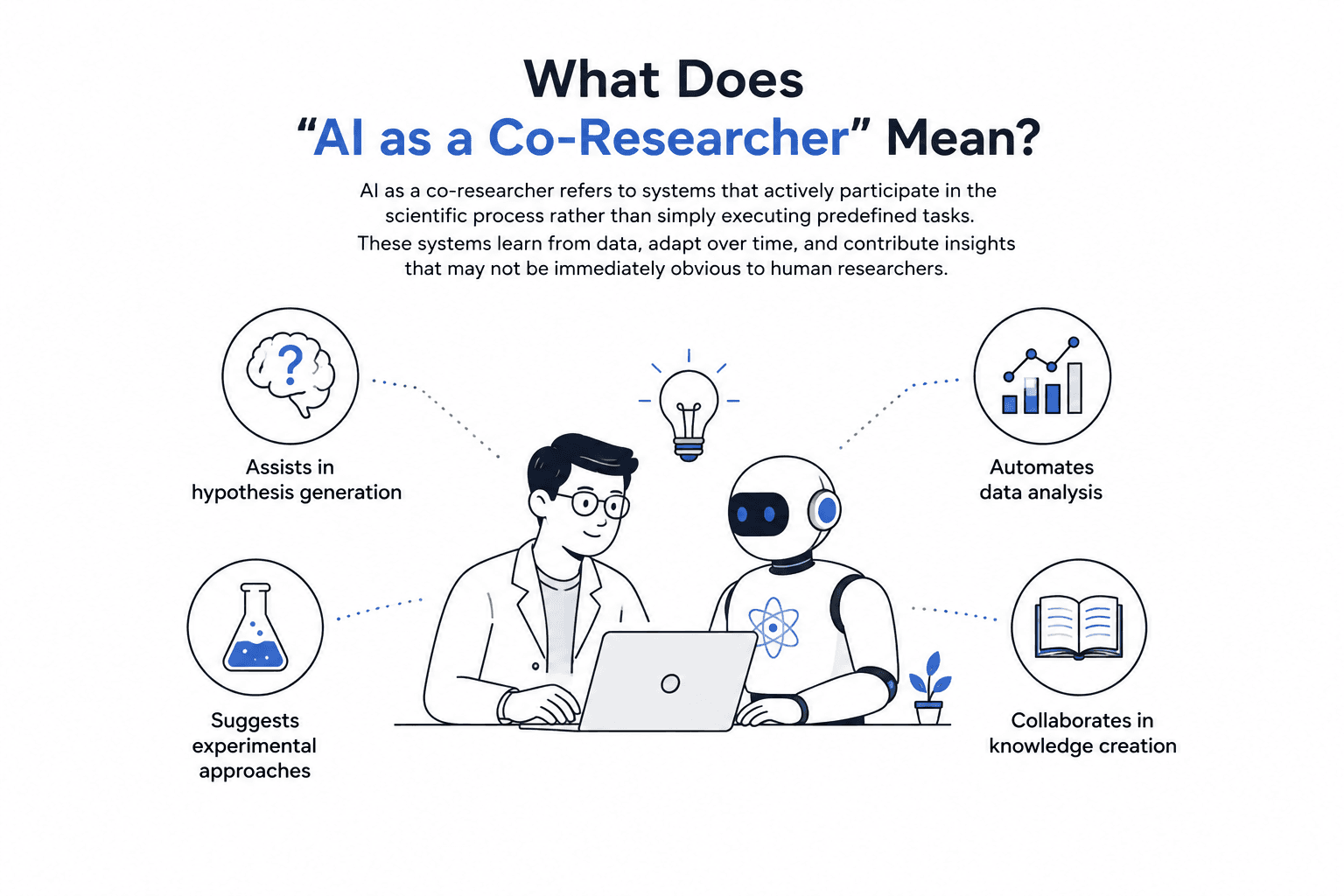
What Does “AI as a Co-Researcher” Mean?
AI as a co-researcher refers to systems that actively participate in the scientific process rather than simply executing predefined tasks. These systems can assist in hypothesis generation, experimental design, data analysis, and even writing research papers. Unlike traditional tools, AI systems learn from data, adapt over time, and contribute insights that may not be immediately obvious to human researchers.
- Assists in hypothesis generation
- Automates data analysis
- Suggests experimental approaches
- Collaborates in knowledge creation
How AI Functions in Research Workflows
AI integrates into research workflows as a continuous cycle of learning and discovery. It begins by processing vast amounts of structured and unstructured data, identifying patterns that humans might miss. Based on these insights, AI can propose hypotheses or refine existing ones. It then supports experimental design by suggesting variables, simulations, or models to test. Finally, AI assists in interpreting results and generating reports, enabling researchers to focus on higher-level thinking and innovation.
Core Capabilities of AI Co-Researchers
AI co-researchers are transforming modern scientific research by assisting with literature reviews, hypothesis generation, data analysis, and report creation. Advanced systems like Google’s AI co-scientist and OpenAI’s Deep Research can rapidly process massive amounts of scientific information, identify patterns, and generate structured research insights. These tools improve research speed, automate repetitive tasks, and support interdisciplinary collaboration. However, experts warn that AI systems still face challenges such as hallucinated citations, biased outputs, and unethical practices like p-hacking, making human supervision essential for maintaining scientific integrity and research quality.
Key Highlights
- AI can summarize thousands of research papers within minutes.
- Multi-agent AI systems simulate collaborative scientific reasoning.
- AI tools help researchers generate hypotheses and predictive models.
- Healthcare research benefits from AI-driven data interpretation.
- Human oversight remains critical to prevent misinformation and fabricated results.
- AI-assisted research is expected to reshape the future of global scientific discovery.
Real-World Applications
Artificial intelligence is rapidly transforming scientific research by accelerating discoveries across healthcare, biotechnology, climate science, and data analytics. Tasks that once required months of manual effort—such as analyzing datasets, reviewing scientific literature, and identifying research patterns—can now be completed within minutes using advanced AI systems. AI-powered tools help researchers generate hypotheses, improve predictive modeling, automate repetitive processes, and uncover hidden insights from complex information. These technologies are also enhancing collaboration between disciplines and enabling faster innovation in medicine and scientific development. As AI continues to evolve, it is becoming an essential research partner that is reshaping how modern science is conducted worldwide.
- Drug Discovery: Identifying new compounds and predicting molecular behavior
- Climate Science: Modeling environmental changes and predicting future scenarios
- Material Science: Discovering new materials with desired properties
- Neuroscience: Understanding brain patterns and cognitive functions
- Genomics: Accelerating DNA sequencing and analysis
Benefits of AI in Scientific Research
- Faster discoveries
- Improved accuracy
- Deeper insights from data
- Reduced research time
- Enhanced collaboration
The greatest breakthroughs will come from human curiosity powered by machine intelligence.
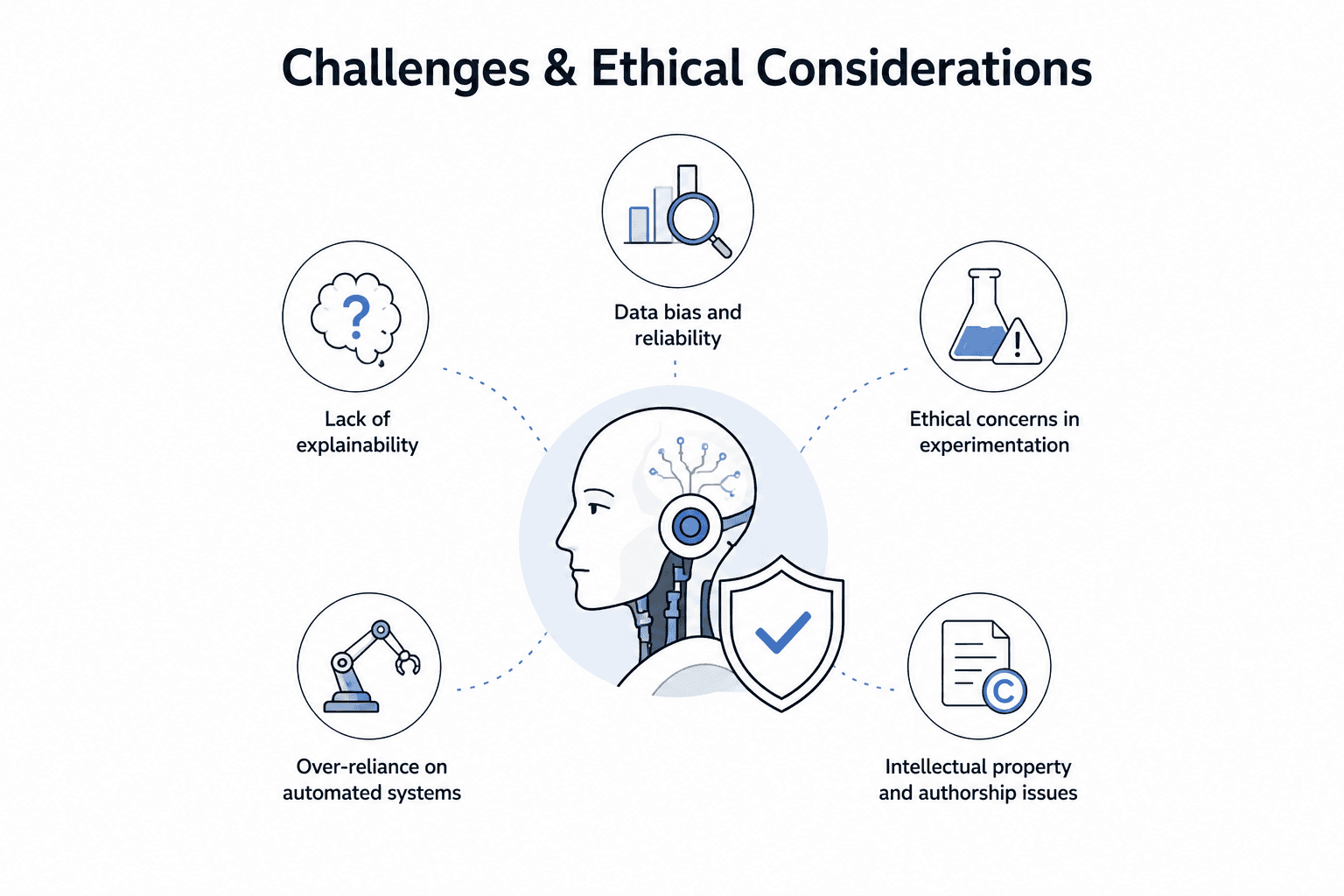
Challenges & Ethical Considerations
While AI offers enormous potential in scientific research, it also introduces significant ethical and practical challenges that require careful oversight. AI systems can sometimes generate inaccurate information, fabricated citations, or biased conclusions, which may compromise research integrity if left unchecked. Concerns such as data privacy, transparency, plagiarism, and “p-hacking” have become major issues as AI tools increasingly participate in research workflows. Additionally, many AI systems rely heavily on open-access information and may ignore high-quality paywalled studies, leading to incomplete or misleading results. Experts emphasize that human supervision, ethical guidelines, and transparent AI usage policies are essential to ensure responsible, reliable, and trustworthy scientific advancement in the future.
- Data bias and reliability
- Lack of explainability in AI models
- Ethical concerns in experimentation
- Over-reliance on automated systems
- Intellectual property and authorship issues
Human Researchers vs AI Co-Researchers
| Aspect | Human Researchers | AI-Co-Researchers |
|---|---|---|
| Creativity | High | Emerging |
| Speed | Moderate | Very High |
| Data Handling | Limited | Massive |
| Intuition | Strong | Limited |
| Consistency | Variable | High |
The Future of AI in Science
The future of scientific discovery will be defined by human-AI collaboration, where AI systems act as intelligent partners rather than passive tools. Research labs will increasingly rely on AI to automate experiments, generate insights, and even propose entirely new fields of study. As these systems evolve, they will enable faster innovation cycles and unlock discoveries at a scale never seen before.
- Autonomous research systems
- AI-generated hypotheses
- Real-time global collaboration
- Continuous learning research environments
Tools & Technologies
- Machine Learning frameworks (TensorFlow, PyTorch)
- Scientific AI platforms (DeepMind AlphaFold)
- Data analysis tools
- Natural Language Processing models
- Simulation and modeling software