Global AI Governance and the Rise of Responsible Innovation
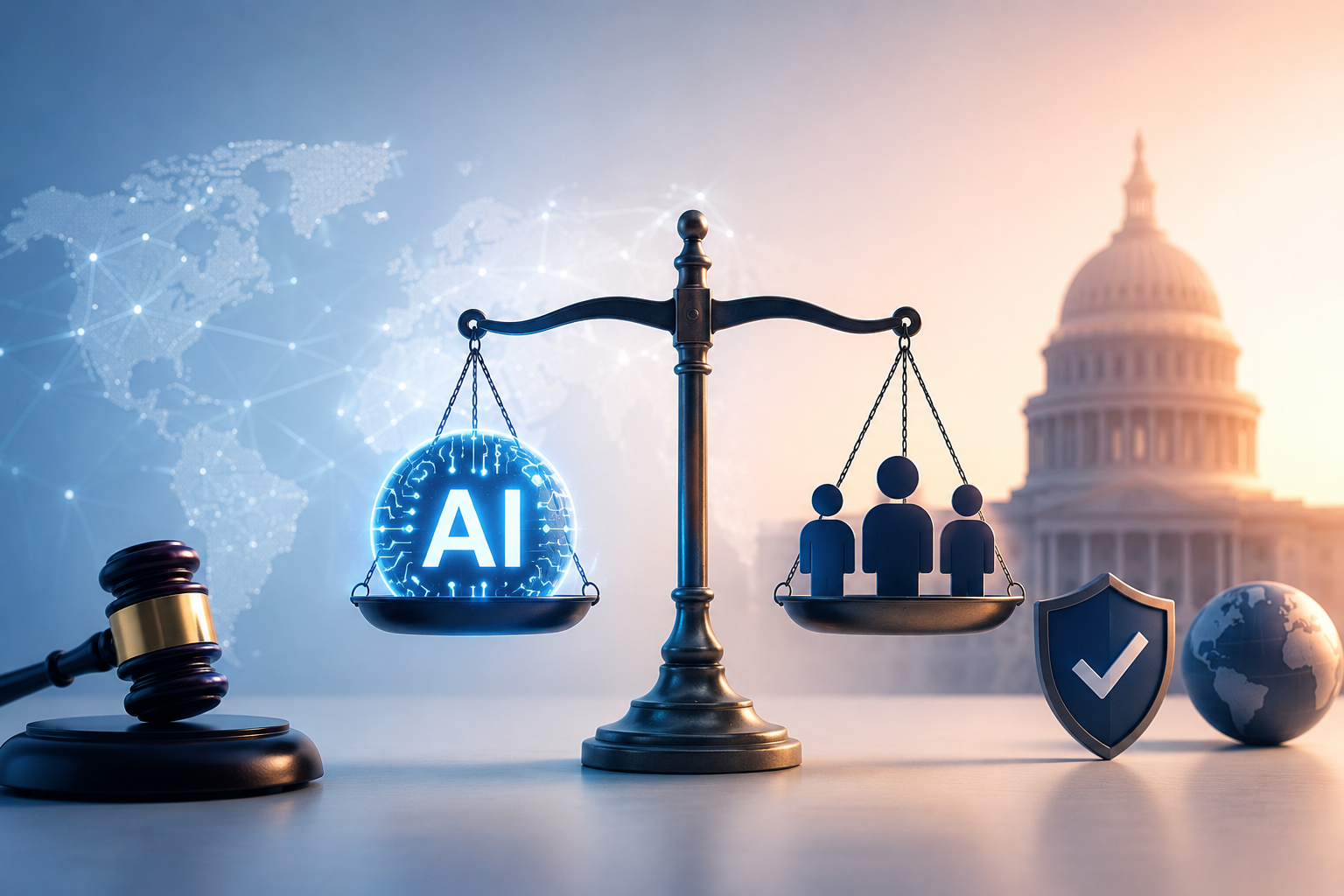
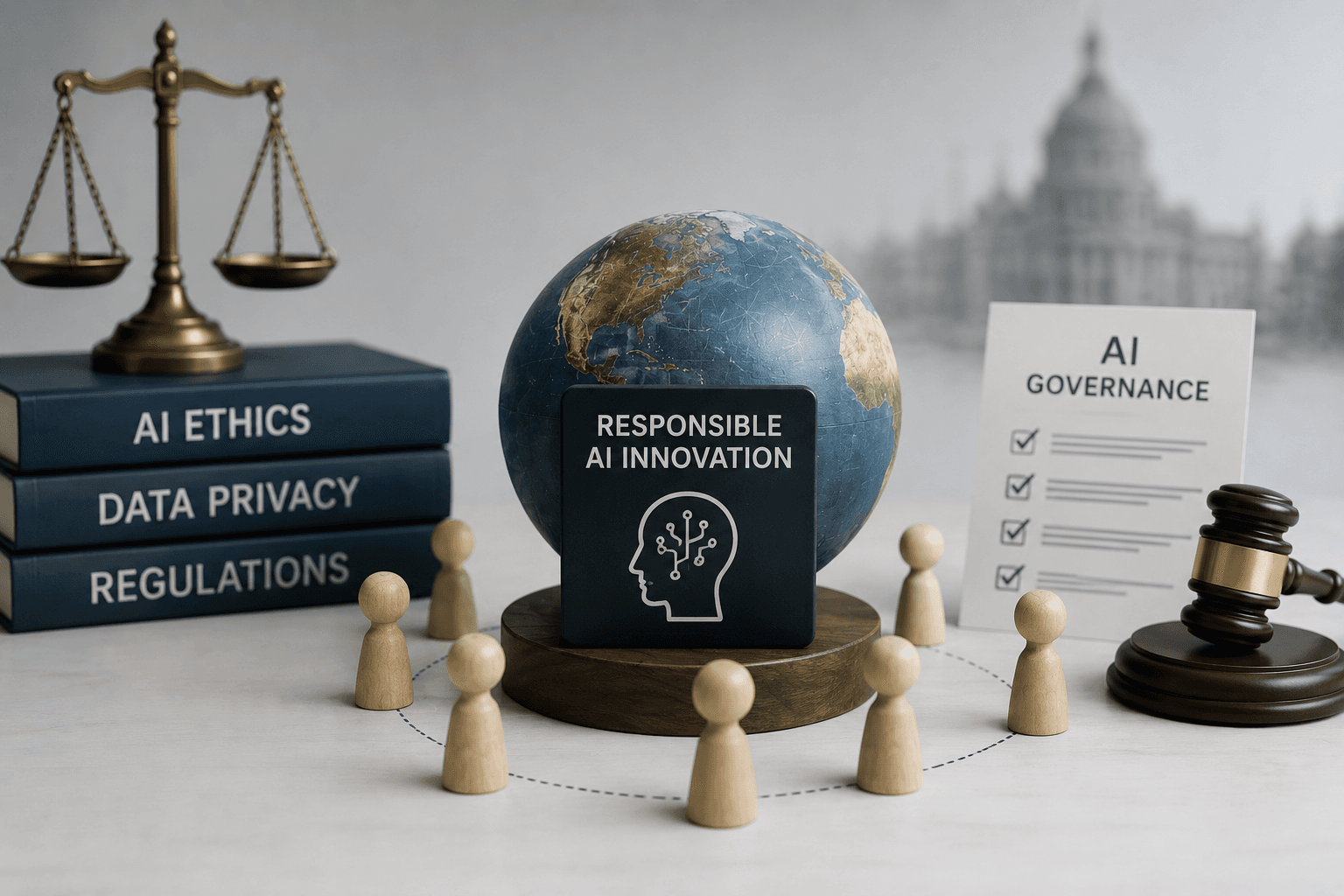
rtificial intelligence is rapidly becoming one of the most influential technologies shaping global politics, business, and scientific innovation. Governments, international organizations, and technology companies are now racing to establish governance frameworks that balance innovation with accountability. Recent developments show that more than 70 countries have proposed over 1,000 AI-related policies and legal initiatives to regulate the growing influence of AI systems across industries. India has emerged as a major player in this movement by introducing the AI Governance and Economic Group (AIGEG), the country’s first formal inter-ministerial AI governance body designed to coordinate national AI policy, assess economic impacts, and create long-term deployment strategies. Simultaneously, India’s updated AI Governance Guidelines promote a “pro-innovation” and hands-off regulatory approach that encourages technological growth while introducing ethical guardrails for safety, accountability, and transparency. Globally, organizations such as the International Telecommunication Union (ITU) and the United Nations are emphasizing international cooperation to manage emerging risks linked to autonomous AI agents, misinformation, labor displacement, cybersecurity threats, and deepfake technologies. Experts also warn that fragmented national regulations could create inconsistencies in AI development, making global coordination increasingly necessary. Recent court rulings in India addressing AI-generated deepfakes and personality rights violations further highlight the urgent need for stronger legal protections in the AI era. At the same time, researchers and policymakers continue debating whether AI regulation should focus on specific models, use cases, or the large corporations developing frontier AI systems. As AI capabilities continue evolving at an unprecedented pace, the global conversation is shifting toward responsible innovation, ethical deployment, and the creation of governance systems capable of ensuring that artificial intelligence benefits society while minimizing risks to privacy, security, employment, and human rights.
The challenge is not just building powerful AI—but ensuring it is governed responsibly
What is AI Governance?
AI governance refers to the frameworks, policies, and standards that guide how AI systems are designed, deployed, and monitored. It ensures that AI operates in a way that is ethical, transparent, accountable, and safe. Governance is not just about restricting AI—it is about enabling innovation while minimizing risks to individuals and society.
- Ethical guidelines for AI usage
- Regulatory compliance frameworks
- Risk management systems
- Accountability mechanisms
- Transparency and explainability
Why AI Needs Regulation
Artificial intelligence requires regulation because of its rapidly growing influence on society, economies, security systems, and human decision-making. While AI offers major benefits in healthcare, education, research, automation, and communication, it also introduces serious risks such as misinformation, deepfakes, privacy violations, algorithmic bias, cyber threats, and job displacement. Experts warn that without proper governance, AI systems could be misused for surveillance, manipulation, autonomous cyberattacks, or unethical data exploitation. The lack of globally consistent rules may also create fragmented standards and increase legal uncertainty across countries. Governments and international organizations are therefore working to establish ethical guidelines, accountability frameworks, transparency standards, and safety measures that ensure responsible AI development. Effective regulation is essential not to restrict innovation, but to create trust, protect human rights, maintain public safety, and ensure that AI technologies are developed and deployed for the benefit of society as a whole.
- Prevent bias and discrimination
- Protect user privacy
- Ensure accountability
- Reduce misuse of AI
- Maintain public trust
The Global Regulatory Landscape
The global regulatory landscape for artificial intelligence is evolving rapidly as governments and international organizations attempt to balance innovation with safety and accountability. More than 70 countries have introduced AI-related policies, ethical guidelines, and legal frameworks to address challenges linked to privacy, security, bias, misinformation, and autonomous systems. The European Union’s AI Act focuses on risk-based regulation, while countries such as the United Kingdom and India are promoting more flexible and innovation-friendly approaches. International bodies like the United Nations and the International Telecommunication Union are encouraging global cooperation to create shared governance principles for responsible AI development. However, experts warn that fragmented national regulations may create inconsistencies and enforcement challenges worldwide. As AI technologies continue advancing, global collaboration, transparency standards, ethical safeguards, and international policy coordination are becoming essential for building a trustworthy and secure AI ecosystem.
- European Union: Strong regulation (risk-based AI laws)
- United States: Innovation-driven approach
- China: State-controlled AI development
- Other nations: Balancing growth and safety
The Regulatory War Explained
The rapid advancement of artificial intelligence has triggered an intense global debate over the most effective approach to AI regulation and governance. Governments, regulatory institutions, and technology companies across the world are pursuing different strategies to balance innovation, economic growth, national security, and ethical responsibility. The European Union has adopted a strict risk-based regulatory model through the AI Act, whereas countries such as India and the United Kingdom are promoting more flexible and innovation-oriented frameworks. Simultaneously, policymakers continue to debate whether AI regulations should focus primarily on AI models, their applications, or the major corporations developing frontier AI systems. Growing concerns regarding deepfakes, cybersecurity threats, misinformation, privacy violations, and labor market disruption have further intensified the demand for clear governance structures. This evolving regulatory competition is shaping the future of global AI leadership, digital policy, technological sovereignty, and responsible innovation in the emerging AI-driven world.
- Control vs Innovation
- Safety vs Speed
- Global standards vs Local policies
- Corporate influence vs Government control
Key Pillars of AI Governance
Effective AI governance is built upon several foundational pillars designed to ensure that artificial intelligence systems are developed and deployed responsibly, ethically, and transparently. Key governance principles include accountability, transparency, fairness, privacy protection, safety, human oversight, and regulatory compliance. Governments and international organizations emphasize that AI systems must remain trustworthy, explainable, and aligned with human values while minimizing risks such as bias, misinformation, cyber threats, and unethical surveillance. Another essential pillar is inclusivity, ensuring that AI technologies benefit societies globally rather than widening digital and economic inequalities. Global institutions are also promoting verification standards, traceability mechanisms, and multi-stakeholder collaboration involving governments, researchers, private companies, and civil society organizations. As AI systems continue evolving rapidly, these governance pillars are becoming essential for balancing technological innovation with public trust, security, ethical responsibility, and sustainable global development.
- Transparency (Explainable AI)
- Accountability (Who is responsible?)
- Fairness (Bias mitigation)
- Privacy (Data protection)
- Security (Prevent misuse)
Benefits of Strong AI Governance
- Increased public trust
- Ethical AI deployment
- Sustainable innovation
- Global standardization
- Reduced risks and misuse
Good governance does not slow innovation—it makes it sustainable.
Challenges in Regulating AI
Regulating artificial intelligence presents significant challenges due to the rapid pace of technological advancement, the global nature of AI systems, and the lack of universally accepted legal standards. Governments and regulatory bodies often struggle to create policies that effectively balance innovation with safety, accountability, and ethical responsibility. One major challenge is the absence of a consistent global framework, resulting in fragmented regulations across countries and industries. Additionally, AI systems continuously evolve, making it difficult for existing laws to keep pace with emerging capabilities such as autonomous agents, generative AI, and deepfake technologies. Concerns related to algorithmic bias, misinformation, cybersecurity, privacy violations, labor displacement, and transparency further complicate regulatory efforts. Experts also emphasize the difficulty of determining liability and accountability when AI systems cause harm or make autonomous decisions. As AI adoption accelerates worldwide, international cooperation and adaptive governance strategies are becoming increasingly essential for effective regulation.
- Rapid technological changes
- Lack of global consensus
- Difficulty in enforcing laws
- Balancing innovation and control
- Defining accountability in autonomous systems
The Future of AI Regulation
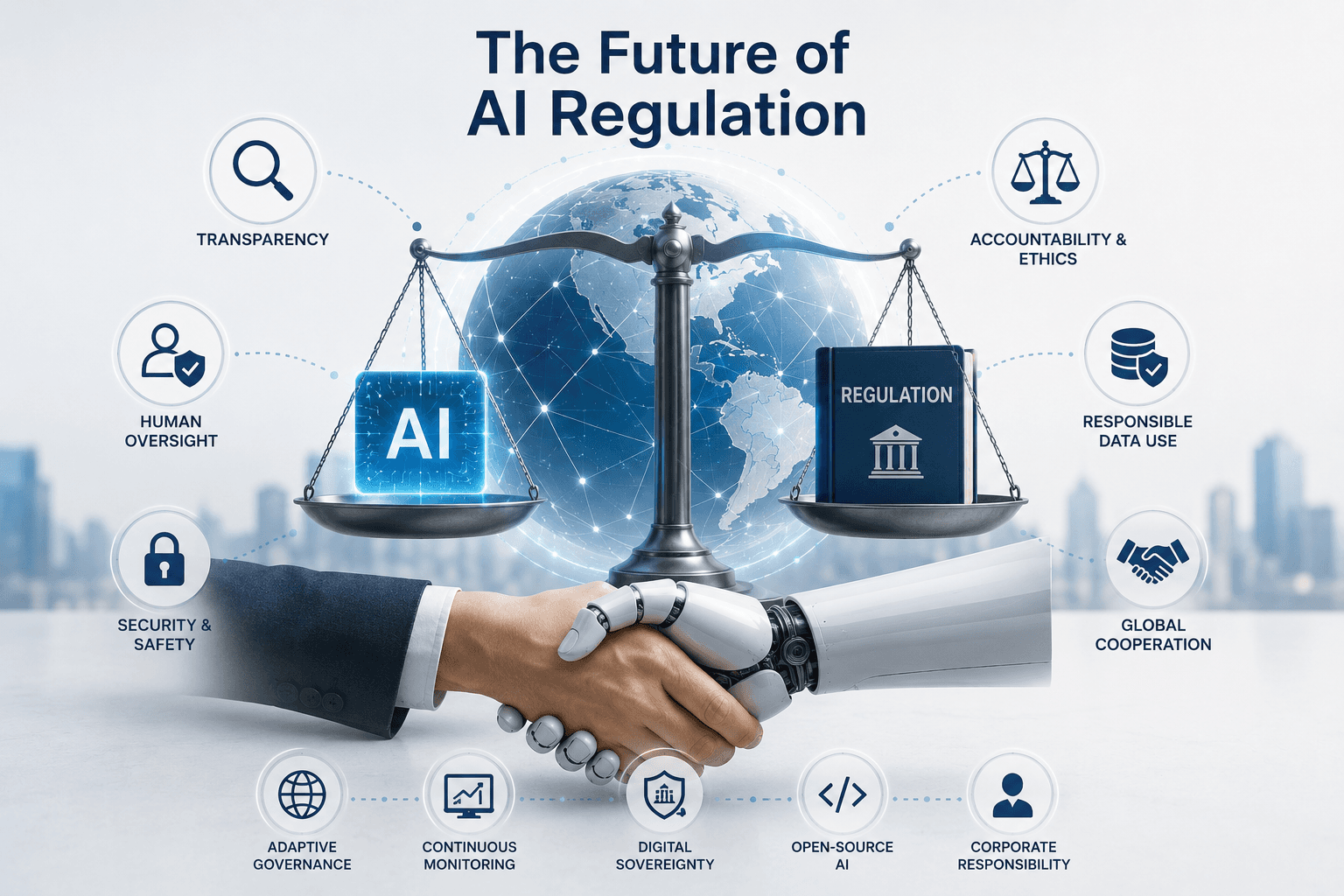
The future of AI regulation is expected to focus on creating balanced governance frameworks that encourage innovation while ensuring safety, accountability, and ethical responsibility. As artificial intelligence systems become more advanced and integrated into critical sectors such as healthcare, finance, education, and national security, governments and international organizations are increasing efforts to establish comprehensive regulatory standards. Future regulations are likely to emphasize transparency, explainability, human oversight, cybersecurity, and responsible data usage. Experts predict that global cooperation will become increasingly important as AI technologies operate across borders and impact societies worldwide. Regulatory models may also shift toward continuous monitoring and adaptive governance rather than fixed rules, allowing policies to evolve alongside technological advancements. At the same time, debates regarding open-source AI, autonomous agents, digital sovereignty, and corporate accountability will continue shaping future policy decisions. Effective AI regulation will ultimately aim to build public trust while ensuring that technological progress benefits society responsibly and sustainably.
- Global AI treaties
- Adaptive regulatory frameworks
- Public-private partnerships
- Continuous monitoring systems